Dropbox DocSend Grow secure file sharing
Secure sharing is one of the key value propositions of DocSend. Customers can share confidential files with fine-grained security controls and create multiple links that tailor access to different audiences. The goal of this project is to increase product growth.
My role
Product design, user research and testing
Team
Product managers, content designer, team of engineers
Timeline
11/2022 - 1/2023
Problem space
The growth of Link Active Users (creating and sharing a link to files) is significant but declining compared to the previous year.
Also, part of the company's strategy is to expand the customer base into the professional service vertical. The trial-to-paid conversion rate among professional services is much lower than in other verticals. Secure sharing as the key value proposition is proven to be the driver of conversion. So it’s critical to engage more professional service users to try out this feature, and ultimately convert to paid plans.
Goals
Make it easier for both first-time and repeat users to create links.
From a product perspective, increase the number of active users on link creation.
Problem: first-time user drop off
Currently, it takes a user 7 steps to get to create a secure link to share a file.

The “a-ha” moment, which is another key value proposition, is when users receive the first visit to the link and see the analytics on how the visitor is engaging with the file that they shared.
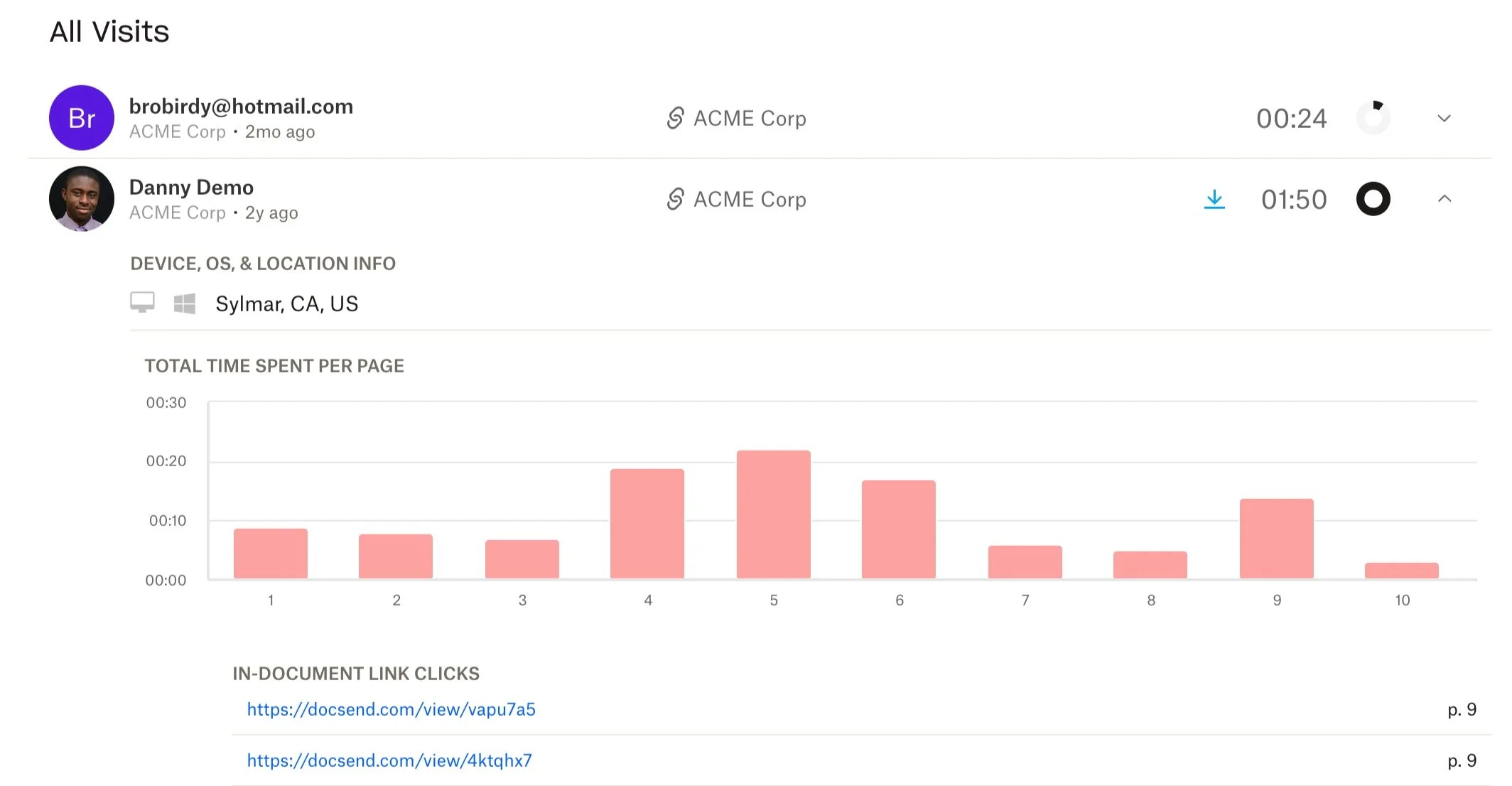
Through watching user sessions on Fullstory, a good amount of new users came to the product for the first time, moved around their cursors but ended up uploading nothing. The complicated workflows block them from understanding DocSend’s unique value propositions. If we miss the opportunity of impressing users in their first session, it’s less likely for them to come back for the second time and eventually will churn.
How might we simplify the upload and share experience for first-time users to get to the “a-ha” moment and benefit from the product values faster?
Solution 1: get the first-time user to “a-ha” moment faster
After multiple rounds of iterations and testings, I came to the solution of a lightweight experience for first-time users to upload the first file and create a link with minimal cognitive load. The major goal is for them to get to the “a-ha” moment faster and easier. So compromising some complexity in the controls that we show for the first time. At the end of this experience, they’d be provided with an educational tooltip to learn about advanced sharing controls.
Solution 2: create synergies for Dropbox sourced first-time users
There are several entry points to guide users from Dropbox core FSS onto the DocSend standalone surface. The goal is to create a synergetic experience between Dropbox and DocSend, so that users can easily share files stored on Dropbox using DocSend’s unique secure controls and receiving analytics.

Problem: fragmented security & permission flows
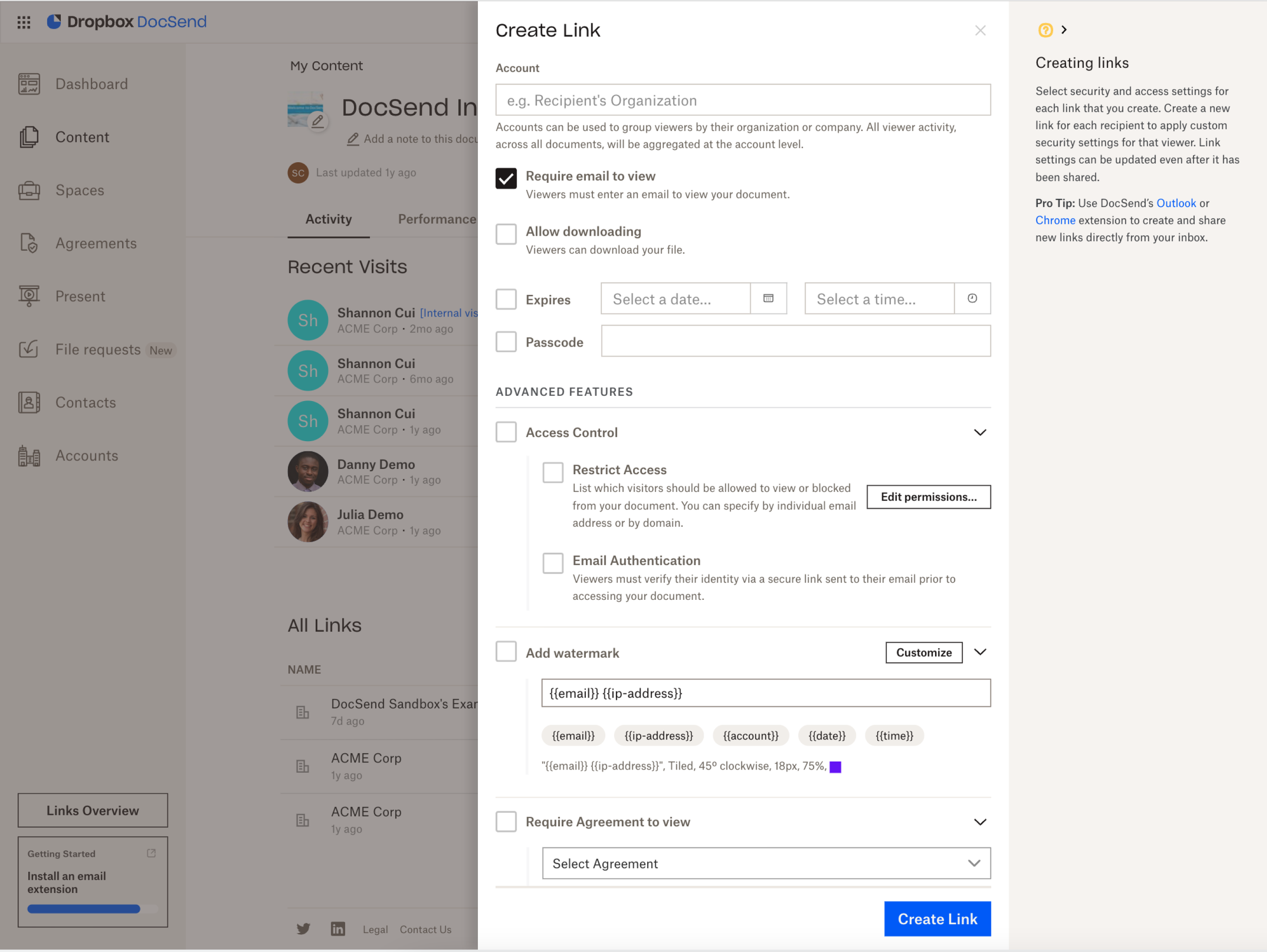
The current link creation flow is powerful but very overwhelming and lacks a clear hierarchy. The advanced security settings are not intuitive to use (eg, Accounts, Watermark...).
Our customers do need intricate levels of controls and permissioning, but the ordering and grouping of the settings are simply based on plan tiers or the recency of the feature release time.
Research and testing insights
I did some card sorting activities to help understand users’ perceptions of the grouping of security settings, and tested a couple of concepts using Usertesting.com. Key insights:
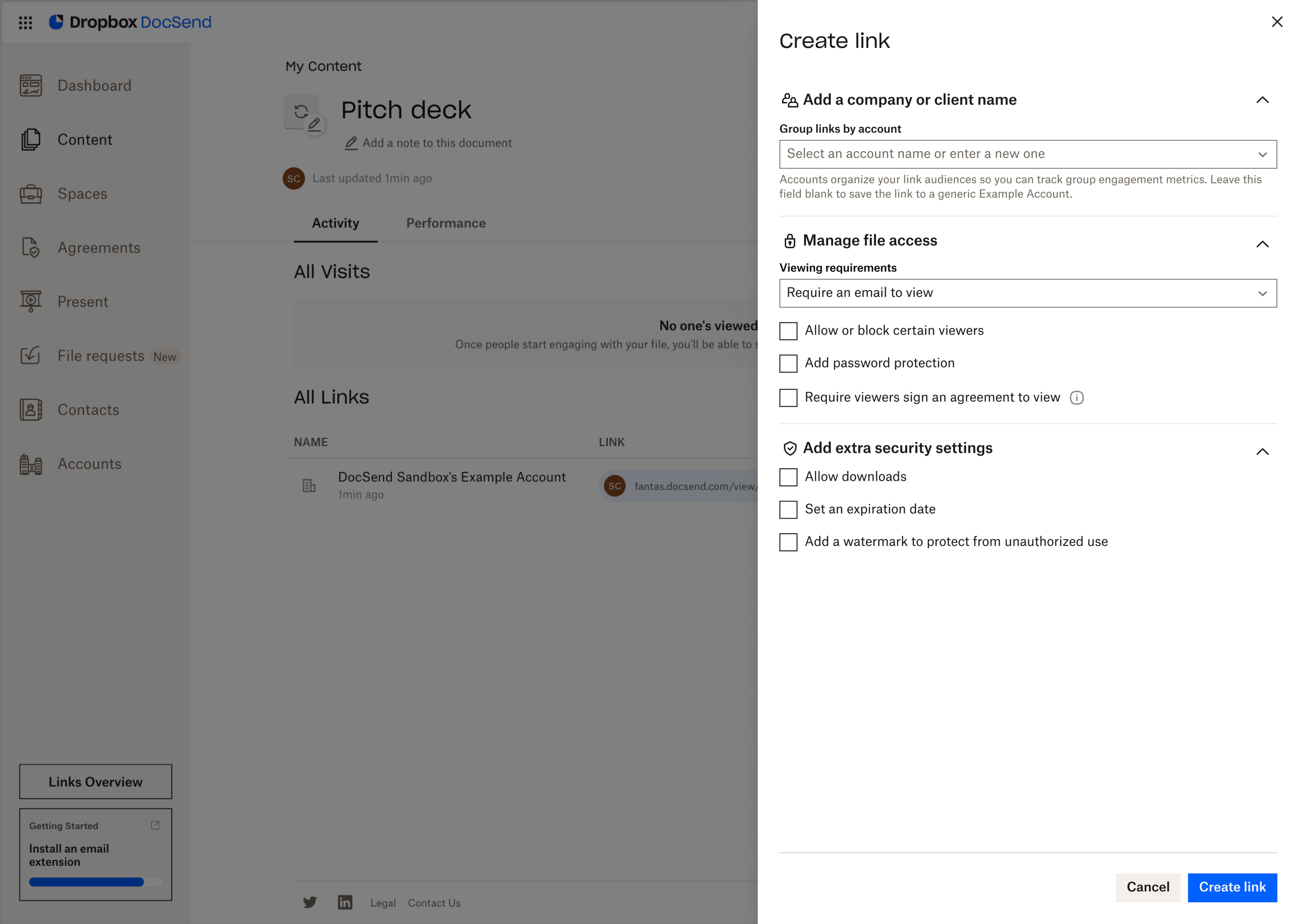
The controls are being better perceived and glanced through in these 3 buckets:
who I’m sharing with
how they can access the file
how I can protect my sensitive file once it’s being shared out
Reduce cognitive load by progressively disclosing the settings.
Users don’t like to read. But need just enough conversational content and design to feel engaged and welcomed.
Solution: Reimagine the sharing flow
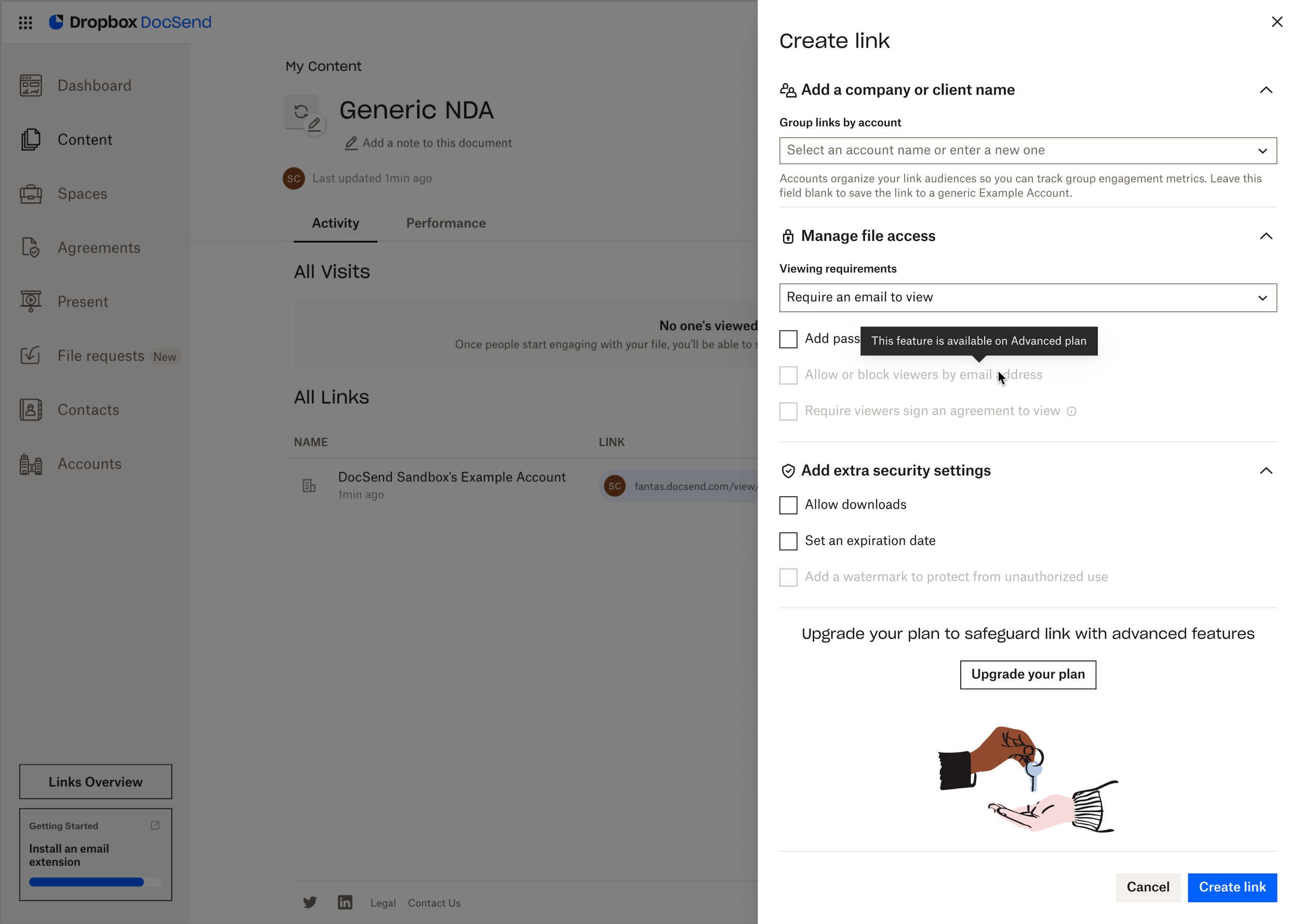
The upselling experience: encourage customers to upgrade the plan by showing a glimpse of advanced settings.
Impact
The link activation rate for the new design has a significant increase (38.64% activation rate) comparing to the control group (18.95%)
